The Beach Is Not a QTE: Five 2026 Indies That Treat Sand Like a Place, Not a Penalty
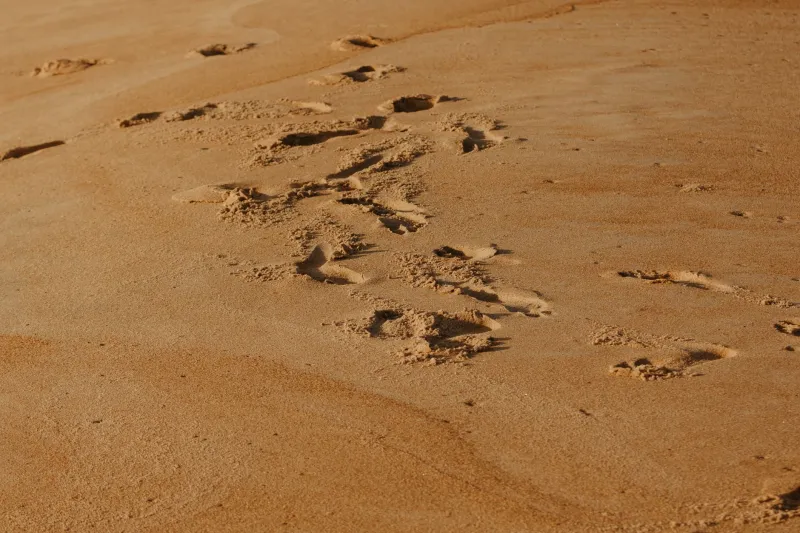
Somewhere around the tenth coastal level in the tenth game this year, a suspicion hardened into a thesis: sand has become the universal shorthand for "we needed a hazard and ran out of ideas." Your character steps off the boardwalk, the walk cycle switches to a labored wade, the stamina bar starts sweating, and a little pop-up in your brain says Movement Speed Reduced 40%. Congratulations. You have arrived at the beach. Please enjoy your status effect.
This is not a physics problem. It's a design reflex, and it's the least interesting thing you can do with the most interesting surface in games.
The Friction Reflex
Loose terrain is the cheapest kind of friction to implement. Snow crunches, mud grabs, and sand — apparently — must also grab, because that's what sand does, right? It shifts underfoot. It fills your shoes. It ends up in the cooler, the rental car, and, eventually, your descendants' beach bags.
All true. Also all boring.
Real beaches are not rugs with opinions. They are places of evidence. A tide line is a clock. A footprint is a confession. Wrack and shells and the ghost rectangle where somebody's sandcastle stood are a whole narrative that doesn't need a single line of dialogue. A beach is a surface that remembers, and the games that get it right don't slow you down — they let you read.
When a game makes sand cost you speed, it's usually confessing something: this beach isn't a place, it's a hallway with a bad carpet. You are not exploring. You are commuting through scenery on the way to the actual level.
What Sand Can Actually Do
Here is a short and entirely free list of verbs that sand performs natively and that almost no game uses: it erodes, it buries, it reveals, it records, it drifts, it hides, it glares, it squeaks underfoot in exactly one specific pitch that every Mid-Atlantic beachgoer recognizes, and it moves the map every six hours without anyone touching a level editor.
A beach is a clock, an archive, and an obstacle course that rearranges itself on a schedule. That's not a speed penalty. That's level design with a tide table.
The counterargument, which I will now generously make on behalf of the defense: friction can be expressive. Wading through thigh-deep snow in a certain 2018 western was miserable in a way that communicated something. Trudging through a post-apocalyptic landscape with a stack of boxes on your back was the entire point of the game. Fair. But there's a difference between friction that tells you about the world and friction that simply bills you for existing. One is a sentence. The other is a tax.
We don't model sunscreen reapplication. We don't model the way a beach chair leg sinks unevenly into the sand at a 4-degree angle and slowly ruins your posture for the rest of the afternoon. Games are allowed to skip the tedious parts of the beach. The question is whether they skip the tedious parts and replace them with nothing.
Five 2026 Indies That Get It
These are the small-studio games this year that put a beach in front of you and did not immediately make you regret it.
Low Tide, Late Rent (Horseshoe Crab Collective)
An exploration game whose map is a tide chart. You don't fight the water or the sand; you schedule around them. A sandbar is a road at 8 a.m. and a memory by noon. The game's central tension isn't "can I cross this" but "do I have time to see what's out there before the water takes it back." Sand here is a deadline, not a debuff, and it's the rare game where the beach is genuinely the level rather than the thing between levels.
Grain by Grain
A wind-and-dune puzzle game where you never really walk on sand at all — you shape it. Ridges become ramps, ramps become shade, shade becomes a route for something smaller than you. It's the only 2026 title I've played where the phrase "sand physics" made me lean forward instead of sigh. The whole game is a reminder that sand is a material before it's an inconvenience.
Umbrella Politics
A co-op comedy about staking out territory on a crowded public beach, and the funniest game of the year about property lines. Sand is the medium of passive aggression: towel placement, umbrella shadows, the eternal war over the spot near the lifeguard stand. Nobody's speed is reduced. Everybody's dignity is.
The Sifting
An archaeology game where digging is the verb and sand is the archive. You're not delayed by the beach; you're reading it, layer by layer, with a trowel and an increasingly judgmental field notebook. It's slow on purpose, but the slowness is the content, which is the one excuse that has always worked.
Undertow Bodega
A shop-management sim on a shoreline that rearranges itself overnight. Your floor plan is different every morning. Your inventory is somewhere in the dunes. Customer flow depends on which path the tide left open. It's the only game this year that made me think about longshore drift as a business problem, and I mean that as high praise.
A Beach Should Be a Sentence
None of these games are anti-friction. They're anti-laziness. They understand that the beach is already the most dynamic surface a designer could ask for — it moves, it erases, it remembers, it glares — and that charging the player a speed tax to walk on it is like charging them for the view.
So here's the ask for 2027 and beyond: if your game has a beach in it, let me walk on it. Let me leave footprints and find the ones other people left. Let me read the tide line like a box score. Make sand a sentence, not an adjective.
And for the love of everything, stop making me sink.