Cave Dwellers With Controllers: Four 2026 Devs on Making Games Where the Sun Don't Shine
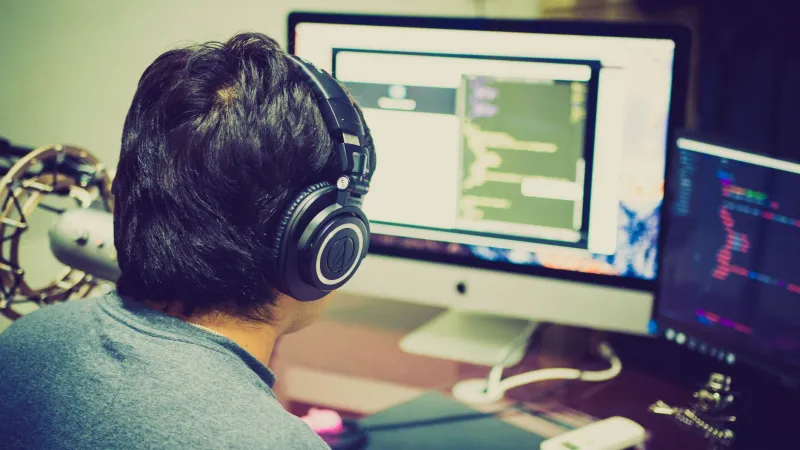
There is a particular smell to a game studio that has no windows. It is part electronics, part carpet, part whatever someone microwaved at 1 p.m. and forgot about. Over the past few months we talked to four developers who work in exactly that environment, not out of aesthetic commitment but because rent is rent and the sun in this country does not negotiate.
Their studios: a closet in Chicago, a basement in Kansas City, a windowless second floor above a laundromat in Portland, and a blacked-out garage in Tucson. Their budgets: small, smaller, and one that got a grant. Their games: all shipping or nearing ship in 2026. What follows is a mix of shop talk, genuinely useful advice for solo developers, and at least one story about a sump pump.
Priya Raghunathan, Closet Door Games — Chicago
The closet is three feet by five. The monitor is flush against the wall. The chair does not recline, because there is nothing to recline into. Priya Raghunathan has made two games in it.
"People hear closet and they picture sad," she said. "It is not sad. It is the only room in the apartment where nobody can walk behind me and start a conversation. That is worth more than a view."
She records voice-over in what she calls a hoodie fort — a sweatshirt draped over her head and the microphone, which kills the room reflection well enough for a game about a very tired lighthouse keeper. Her one complaint is light bleed under the door, a thin yellow line that she has come to think of as a clock.
"When the line goes orange I know it is four o'clock and I have not stood up since ten. I built a little cardboard flap for it. The flap was the best purchase of the year, and it cost nothing."
Her practical advice: pick a room where the door closes and stays closed, buy the heaviest curtain you can afford for any window in earshot, and stop pretending you will take breaks voluntarily. "Put the break in the schedule. The room will not do it for you."
Marcus Bell, Basement Level — Kansas City
Marcus Bell's basement has a sump pump that runs every eleven minutes during a wet spring, and for two years he treated it as an enemy. Then he started recording it.
"The noise floor down here is weirdly musical," he said. "Low rumble, a little click when it kicks off. I sampled it and pitched it down and it became the ambience for the whole flooded district in the game. The basement wrote a level."
That game is a slow, soggy management sim about a town that keeps taking on water, and Bell is candid that the setting came from looking up at his own ceiling and wondering how much rain it would take. He works with a dehumidifier on a timer, a folding table, and a folding chair that has outlived three keyboards.
His advice is about honesty with your own body. "A basement will let you sit for nine hours and not notice. Set an alarm. Stand up. Go touch the railing of your own stairs like a person seeing the ocean."
Tessa Oyelaran, Sunless Studio — Portland
Above a laundromat, on a street with good coffee and bad parking, Tessa Oyelaran rents a room with no windows and a floor that hums. She schedules QA sessions to the spin cycle.
"You get about twenty-two minutes of dryer rumble, then a quiet gap while the next load goes in," she said. "I test the loud, chaotic levels during the rumble and the quiet puzzle stuff in the gap. It is not a productivity system. It is superstition that happens to be load-bearing."
The studio mascot is a fern under a grow lamp, purchased as a joke and now genuinely thriving. Oyelaran says the plant is the reason she noticed how little she was leaving the building.
"I water the fern and I go outside. Those two things got linked in my head. The fern has done more for my sleep schedule than any app." Her takeaway for other developers: give yourself one dumb ritual that forces a door open. A plant, a mail run, a walk to buy a terrible sandwich. "Anything that makes the outside a chore instead of a choice."
Hank Duvall, Nightshift Microgames — Tucson
In Tucson, the problem is not a lack of light. It is that the light is a weapon from May through September. Hank Duvall's converted garage has blackout curtains rated for a nursery and a portable AC unit that he describes as "loud enough to have opinions."
He works nights. He sleeps from noon to seven. His games, three of them now, all share a quality he struggles to name and eventually calls temperature.
"Everything I make feels like it is happening at 2 a.m. in a hot parking lot. I did not plan that. It is just the only atmosphere I have direct access to."
Duvall's practical notes are the most concrete of the four. Insulation before hardware. A second monitor is worth less than a decent chair. And if you are going to work in a garage, buy a carbon monoxide detector before you buy anything else, a point he makes with the flat delivery of a man who has thought about it more than once.
What the Four Agree On
Strip away the anecdotes and the advice converges. A windowless room removes glare and distraction and hands you a routine problem in exchange; the devs who last are the ones who build the exits into the day on purpose. Treat the room as a constraint that generates style rather than a punishment to endure. Sound-design your own space before you sound-design the game. And do not romanticize the cave.
"Nobody should feel cool about this," Raghunathan said. "It is a room. I make games in it. The best thing I did this year was a piece of cardboard."