The Tide Always Wins: Five 2026 Indies That Treat Building Like a Beach Toy
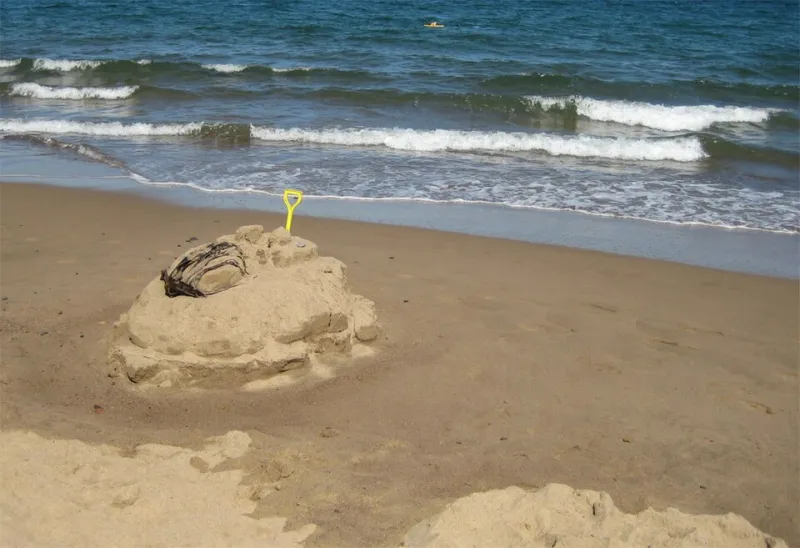
Photo: Pauline E , CC BY-SA 2.0, via Wikimedia Commons
I have a confession: in most building games, I become a spreadsheet landlord. I stockpile oak planks. I label chests. I build a warehouse for the warehouse. Somewhere around hour twelve, I stop playing a game and start auditing a Home Depot. That is why the five 2026 indies below feel like a beach vacation for my brain. Each one lets you build something real, then takes it away with the tide, the rain, or the neighbor who needs their folding chairs back.
This is not a plea to make every game disposable. Permanence has its place, especially when a save file is supposed to feel like a home. But there is a specific relief in construction you know will not last. Call it the sandcastle rule: if the ocean is going to knock it down anyway, you might as well make the tower weird.
The Sandcastle Rule, for People With Too Many Digital Crates
A sandcastle is not a failure because the tide gets it. The tide is part of the project. You build with the clock in mind, you invite friends to see it, and you take the mental photo before the water arrives. The best temporary-building games borrow that energy. They swap hoarding anxiety for playful experimentation. You stop asking, will this last forever? and start asking, what can I try before the next high tide?
That shift matters. Most survival and crafting games train us to protect resources like they are retirement savings. Temporary construction flips the script. Materials rotate back into the world. Mistakes become weather. The stakes get smaller in a way that actually makes the game bigger.
Tidewater Zoning — The HOA Is a Moon
Tidewater Zoning is a coastal town builder with a municipal-satire streak and a tide clock where a budget slider usually goes. You place boardwalks, bait shops, seawalls, and deeply questionable gazebos, then watch the water decide which zoning permits were a joke. Flooded structures break into salvage, which feeds the next round of building. Nothing is lost so much as redistributed by moon logic.
The genius is that it makes failure feel like municipal comedy instead of personal shame. You do not mourn a washed-out pier; you screenshot it for the town meeting. The caveat is repetition: players who need a permanent skyline may find the rhythm too cyclical. But if you have ever wanted to build a beach town without becoming its landlord, this is the one.
Pallet Fort Summer — The Yard Always Wins
Pallet Fort Summer is a local co-op game about kids building backyard forts out of pallets, blankets, garden chairs, and one heroic cooler. Every in-game week, parents reclaim the yard, and your creation comes down. You can save exactly one object in a memory box: a flag, a sign, a particularly good rock. The rest goes back to the pile.
That single-object rule is cruel in the best way. It forces you to decide what the fort was actually about. Was it the blanket roof? The terrible drawbridge? The sign that said NO ADULTS EXCEPT FOR SNACKS? It also makes each build session feel like a Friday night rather than a permanent address. The game is funniest when the collapse is physical and slightly embarrassing, which is to say, when it is most like an actual backyard.
Rain Chalk — A Civilization in Sidewalk Pastels
Rain Chalk lets you draw a tiny city on a sidewalk, give it little districts, and watch a weather forecast with the dread of a wedding planner. Rain erases your work. Then you draw again, carrying over a journal that records shapes and silly names rather than stats. The city is temporary; the habit of making it is not.
This is the most experimental game on the list, and the one most likely to split a room. Some players will find the erasure meditative. Others will wonder why they are rebuilding the same bus depot for the fourth time. But Rain Chalk understands something useful: cleanup is often the barrier to creativity. If the rain handles cleanup, you are free to draw a subway line shaped like a hot dog. The game does not judge. The sidewalk does not either. The rain just arrives.
Perennial, Maybe — The Garden Does Not Respect Your Plan
Perennial, Maybe is a gardening game where you guide beds, compost old plants, and watch seeds reseed with the confidence of a neighbor who knows your lawn better than you do. Plants cross-pollinate. Shade moves. A flower you loved becomes a volunteer patch in the wrong corner, which is either a disaster or the whole point. You cannot hoard seeds forever because the garden keeps asking you to plant them.
The game is temporary in the slow way: seasons turn, beds change, and your careful plan becomes a group project with bees. It is less about losing your work than about learning to collaborate with weather. The best sessions end with a garden you did not entirely design and a compost pile that feels suspiciously like progress.
Bonfire Lease — Build a Camp, Leave No Trace
Bonfire Lease is a camp-building game with a ranger at the end of the night. You stack driftwood shelters, arrange cooking rocks, and make a fire ring that looks responsible enough for a park sign. By morning, you must pack it out. Structures decay into materials, and your score rewards leave-no-trace behavior over permanence.
The game turns construction into an evening, not an investment. That makes every choice feel lighter and sharper at the same time. Do you build the big windbreak or the good cooking setup? Do you spend your last logs on a bench with a view? You cannot keep it, so you might as well make it pleasant. It is the rare building game where the best compliment is that the campsite looked great for about six hours.
Why Temporary Construction Works, and When It Does Not
The sandcastle rule is not a universal fix. A game that erases everything without memory can feel like busywork. The ones that work best leave a trace: a journal, a photo mode, a salvaged object, a compost pile, a score for leaving no trace. Impermanence needs a little emotional accounting, or it just becomes a chore with better lighting.
But when it lands, temporary building does something permanent construction rarely does. It lowers the cost of trying. You build the weird tower. You draw the hot-dog subway. You make the fort with the bad drawbridge. The tide takes it, and you are still fine. In a hobby full of backlog anxiety and resource hoarding, that is not a small thing. It is a beach towel and a cold drink.
So here is to the 2026 indies that let the ocean win. Build like the tide is watching. It is, and honestly, it has better taste than your chest full of oak planks.